

Have your say on the Tech Plan for health and care
Consultation has concluded
It is important that health and care services are designed around the needs of individuals and enabled by the right technology for the best experience and outcomes.
Our Tech Plan needs to be informed and co-produced by those on the front line, who are already bringing together people, technology and infrastructure to transform health and care.
Over the next few months we will use this website to collaborate with you on the Tech Plan. We will commit to:
- Working openly
- Be clear about what can and can’t be changed
- Tell you how we have taken account of your feedback
How to get involved
We want to involve as many people as possible to help us understand how we can best support the health and care system to deliver the ambition set out in the NHS Long Term Plan and the Department of Health’s Tech Vision, as well as the forthcoming NHS People Plan.
Through this platform, you can register to participate and share your views in the following ways:
- Comment on our vision - this is a working document and will be updated as we continue to engage on this. You do not need to register to see this but you do need to register to leave a comment.
- Register or sign in to share a case study - if you want to share how you have used tech to help transform services then we would love to hear from you. You can see the contributions others have made without signing in.
Over the next few months, new ways for you to get involved in the Tech Plan will be added here. By registering for the platform, we will be able to keep you updated as we develop the Tech Plan.
If you have any queries about this work or additional comments, please send these to us at techplan@nhsx.nhs.uk
It is important that health and care services are designed around the needs of individuals and enabled by the right technology for the best experience and outcomes.
Our Tech Plan needs to be informed and co-produced by those on the front line, who are already bringing together people, technology and infrastructure to transform health and care.
Over the next few months we will use this website to collaborate with you on the Tech Plan. We will commit to:
- Working openly
- Be clear about what can and can’t be changed
- Tell you how we have taken account of your feedback
How to get involved
We want to involve as many people as possible to help us understand how we can best support the health and care system to deliver the ambition set out in the NHS Long Term Plan and the Department of Health’s Tech Vision, as well as the forthcoming NHS People Plan.
Through this platform, you can register to participate and share your views in the following ways:
- Comment on our vision - this is a working document and will be updated as we continue to engage on this. You do not need to register to see this but you do need to register to leave a comment.
- Register or sign in to share a case study - if you want to share how you have used tech to help transform services then we would love to hear from you. You can see the contributions others have made without signing in.
Over the next few months, new ways for you to get involved in the Tech Plan will be added here. By registering for the platform, we will be able to keep you updated as we develop the Tech Plan.
If you have any queries about this work or additional comments, please send these to us at techplan@nhsx.nhs.uk
Share a case study
Coronavirus (COVID-19):
As the health and care system responds to Coronavirus, we are pausing active engagement on this plan. In the meantime, you can still read the vision and mission document, and register for updates. 11/05/2020
The case studies below have been supplied by contributors and have not been checked for accuracy by NHSX.
Thank you for sharing your story with us.
Coronavirus (COVID-19): As the health and care system responds to Coronavirus, we are pausing active engagement on this plan. In the meantime, you can still read the vision and mission document, and register for updates. 11/05/2020
-
Developing a Patient centred Digital Social Care Record
by Nicholas Kelly , over 6 years agoRespect Care is a family run care agency providing care to Service Users within local authorities and private sector in London and the South East.
Respect Care came to Axela Innovations to devise an appropriate and well fitting technology that diminished risk for their managers who needed a patient data system to be accessible 24 hours a day.
They already used a care management system and understood the fields of data that needed to be captured. However, after the initial meeting with them, two things became clear. Firstly, although they had defined their need to cover all types of client... Continue reading
Respect Care is a family run care agency providing care to Service Users within local authorities and private sector in London and the South East.
Respect Care came to Axela Innovations to devise an appropriate and well fitting technology that diminished risk for their managers who needed a patient data system to be accessible 24 hours a day.
They already used a care management system and understood the fields of data that needed to be captured. However, after the initial meeting with them, two things became clear. Firstly, although they had defined their need to cover all types of client services such as home from hospital and ongoing care, plus the CQC mandatory reporting, they had not identified the main problem which was that of the time taken to complete the initial assessment, often this being in excess of 5 hours.
We spent time with Respect Care getting to know the organisation and understanding how they work. We helped Respect Care establish a common language for dealing with clients so that all staff knew exactly what the terminology meant. Then we helped formalise their working practices into protocols (which they turned into a manual and use to train staff on the new system) so that everyone knew what was expected of them, and when it was expected.
What we delivered was a customised version of cAIr:ID our care assessment, care management, risk assessment and medication system. Because cAIr:ID is web-based, all the Respect Care staff can securely access it at any time.
All they need is a laptop with an Internet connection. Respect Care’s data is centralised on a secure cloud database that we designed and built, so that cAIr:ID sophisticated reporting facility provides the latest up-to-the minute data to all levels of the organisation, from head office to front-line staff.
Implementing cAIr:ID meant that for the first time, managers could easily analyse and monitor staff caseloads. Reporting to Head Office and to funders became far simpler since all data is instantly available. Staff benefit from a friendly interface that gives them easy access to their client needs, and cAIr:ID supports staff on a daily basis with alerts and prompts, helping staff stay up-to-date with their caseload activities.
Skills
Co-production, Stakeholder Research, Workflow Mapping, Patient Engagement
-
REVOLUTIONISING COMMUNICATIONS ACROSS HEALTH AND CARE
by Dr Sandeep Bansal, over 6 years agoINTRODUCTION
For decades radio pagers have been used across the NHS as a robust method of communication. West Suffolk NHS Foundation Trust was no exception and relied on the one-way messaging system.
West Suffolk NHS Foundation Trust is a highly successful, award-winning trust providing hospital and community services to a population of around 280,000 people who live in west Suffolk. It is one of the UK's leading foundation trusts, with a 430-bed hospital. It was selected by NHS England as a Global Digital Exemplar for delivering exceptional care, efficiently, through the use of world-class digital technology and information.
The trust... Continue reading
INTRODUCTION
For decades radio pagers have been used across the NHS as a robust method of communication. West Suffolk NHS Foundation Trust was no exception and relied on the one-way messaging system.
West Suffolk NHS Foundation Trust is a highly successful, award-winning trust providing hospital and community services to a population of around 280,000 people who live in west Suffolk. It is one of the UK's leading foundation trusts, with a 430-bed hospital. It was selected by NHS England as a Global Digital Exemplar for delivering exceptional care, efficiently, through the use of world-class digital technology and information.
The trust identified that the pager system was not fit for the modern healthcare workforce and the people they care for.
The problem is that the recipient does not know who is bleeping, why they are bleeping, or the level of urgency. This led to patient care being interrupted, time being wasted and made prioritisation difficult.
The trust also did not want frontline staff to turn to non-approved communication tools to fill the gap created by pagers. A solution was needed that satisfied NHS Information Governance (IG) whilst giving staff a modern-day alternative in the form of a secure messaging application.
Dr Nick Jenkins, Medical Director at the trust, explains:
“Everyone uses WhatsApp as it is so much easier, but it doesn’t meet the confidentiality standards of the NHS. As a medical director
I couldn’t sanction it, so I started looking for an alternative.“
Armed with this knowledge and commitment to patient safety and clinical excellence, the trust explored if there was a different option that could improve the quality and efficiency of service delivery for patients, whilst saving time and improving working life for their staff.
Jenna Sendall, Speech Therapist, explains what replacing the pager system means for her:
“Using Medic Bleep instead of the old pagers is fantastic. It allows us to create groups within the speech therapy department and the sub- teams, which is great because we can communicate with our colleagues really easily. We can see when a message has been delivered and read, so we know if it has been actioned, which is brilliant.”
The Trust partnered with Medic Creations in 2017 to pilot a secure healthcare communication solution called Medic Bleep. The pilot was conducted across three acute wards in conjunction with community midwives.
Recently Iin February 2019, the Health and Social Care Secretary of State, Matt Hancock, announcement announced that all NHS trusts will be required to phase out pagers by the end of 2021.
The pilot formed the basis of a study which monitored the ease and time taken to communicate for healthcare professionals between themselves, using the pager-based system and Medic Bleep.
This peer-reviewed study, published in the Digital Health Journal, found that on average nurses saved 21 minutes per shift and junior doctors saved 48 minutes per shift using Medic Bleep.
The results show that Medic Bleep reduced time spent on the tasks requiring interpersonal communication, with efficiencies being seen in everyday tasks, such as: patient admissions, reviews, discharges and medication dispensation.
Helen Boulton, Trauma Nurse Practitioner, says:
“Medic Bleep gives you a trail of communication. Sometimes you’ll be really busy and you’ll get a couple of bleeps through, so you can read them and reply. And if it isn’t urgent you can reply within a few minutes.”
The participating doctors and nurses completed a questionnaire about their experience of Medic Bleep compared to the traditional pager.
This revealed that the healthcare professionals felt the use of Medic Bleep may offer a better quality of work life, citing reasons such as:
Easier, less frustrating communication
Ability to see more patients
More time for patient care
Less distraction in workflow, through the ability to triage tasks and reduce bottlenecks
Since the pilot, the trust and Medic Creations worked together closely to make sure everyone was fully on board with the transformation and the robust infrastructure was in place.
BESPOKE SOLUTION
During the implementation process, the project team mapped out key communication pathways and processes in conjunction with healthcare staff to identify areas where efficiencies can be made, but also to ensure that a bespoke solution was created, specific to West Suffolk NHS Foundation Trust.
Mike Bone, CIO at the trust, said:
"Part of being a global digital exemplar was to encourage innovation and look at better ways of using technology and exploiting it to improve clinical experience in the patient journey...it quickly became apparent that Medic Bleep has huge potential.”
GOVERNANCE AND CLINICAL SAFETY
Information must be complete, secure and accurate for a healthcare organisation to deliver excellent patient care. Both Medic Creations and the Trust are committed to IG best practice and treat information as a valued strategic asset. Care teams are now able to exchange patient data whilst adhering to the principles of integrity, security and interoperability.
Digitisation of data naturally attracts added clinical risk. Medic Bleep worked with the Trust to ensure that any added clinical risk was mitigated through a careful and dynamic risk assessment mandated by the Health & Social Care Act called DCB0160 and DCB0129. This remains a dynamic and collaborative process making sure that Medic Bleep is safe and that any clinical risk is mitigated to prevent patient harm.
COMMUNICATING THE CHANGE
Naturally there was a degree of caution towards change, particularly regarding changes to working practice. Historically staff have not been allowed to use smartphones in a clinical setting and there were some concerns that patients would not like this.
The trust and Medic Creations delivered thorough staff training and drop-in sessions to help build confidence in using Medic Bleep and counter change fear. It was also important to communicate the change with patients, to explain why healthcare professionals are using smartphone at the bedside, to help mitigate the risk of negative experience for patients.
BRING-YOUR-OWN-DEVICE (BYOD)
The trust adopted a BYOD strategy with a robust policy that permits staff to use their own smartphones and also provided a small number of managed devices for staff that didn’t own a smartphone or did not want to use their own device. Despite some staff stating concerns before Go-Live, the vast majority of staff have opted to use their own device and patient surveys have not revealed any issues with perception about their use around patients.
Medic Bleep also has a browser (web) interface, so staff have the full flexibility of using a smartphone or desktop as they go about their work.
West Suffolk NHS Trust Staff
embraced BYOD working with: 67% of staff finding Medic Bleep
Easy to Implement
An increase in 24% staff found that their discharge management plan was completed with greater efficiency
James Catton, Physician Associate, explains what it’s like using Medic Bleep:
“Medic Bleep has sped everything up. It makes it a lot quicker for me to talk to my colleagues across the trust.
I don’t necessarily know everybody in this trust, but on Medic Bleep you can find them really quickly through the search function. You can send them a message which has much more detail than a pager ever would have been able to, or if you need to you can speak to them directly through the app on a telephone call.”
Jenna Sendall, Speech and Language Therapist
“In terms the wider hospital it has really improved communication and made it quicker, efficient and streamlined the service.”
West Suffolk NHS Foundation Trust and Medic Creations worked in partnership to provide their patients and staff with a complete, secure and IG compliant communication solution, and went live with Medic Bleep on 24 June 2019, replacing all non-emergency pagers. This was not an easy task and required clear vision, effective leadership and communication throughout the organisation to allow this major change to occur.
87% WSH Staff will recommend Medic Bleep to their collegues
Independent economic evaluation conservatively predicts £2.5 million efficiency saving per trust per year.
-
NHS Blood and Transplant empowers employees with a unified service experience
over 6 years agoNHS Blood and Transplant (NHSBT) is an essential part of the National Health
Service (NHS), providing the blood donation service for England and the organ
donation service for the UK. The organisation manages the donation, storage,
and transplantation of blood, organs, tissue, bone marrow, and stem cells, and
researches new treatments and processes.
NHSBT employs 5,500 people across the UK who work in a wide variety of
roles in different settings. These include staff:
• At blood donation centres and mobile blood collection units
• That liaise with donor families and organ recipients in hospitals
• Researchers in NHSBT laboratories
... Continue reading
NHS Blood and Transplant (NHSBT) is an essential part of the National Health
Service (NHS), providing the blood donation service for England and the organ
donation service for the UK. The organisation manages the donation, storage,
and transplantation of blood, organs, tissue, bone marrow, and stem cells, and
researches new treatments and processes.
NHSBT employs 5,500 people across the UK who work in a wide variety of
roles in different settings. These include staff:
• At blood donation centres and mobile blood collection units
• That liaise with donor families and organ recipients in hospitals
• Researchers in NHSBT laboratories
• Members who carry out operational functions such as HR, finance, and
facilities management
With a purpose to save and improve lives, supporting the NHSBT workforce
is critical to its successful operation. Wendy Dewey, IT Service Manager, NHS
Blood and Transplant, explains: “It’s incredibly important that our workforce is
empowered to focus its time on the activities that support patients, donors,
and their families. Delivering the services they need to excel in their roles is
essential to our success.”
NHSBT was using the ServiceNow Platform to deliver a number of services to help
employees, such as the IT service desk and HR support, but Wendy knew
they were only scratching the surface of what was possible.
“ServiceNow was working for each department, but we had a piecemeal
way of using the platform,” explains Wendy. “There were multiple entry points
for employees depending on whether they wanted to contact the IT service
desk, HR department, or finance, for example. We saw a big opportunity to
bring all our services into a single portal on the platform.”
NHSBT unifies the employee service experience with a
self-service portal built on ServiceNow
NHSBT launched its new services portal, unifying the employee service
experience into a single online destination for any member of staff to get the
help or information they needed.
Through a web browser, either on a desktop, laptop, or mobile device, employees
can launch the portal to instantly access a range of organisation-wide services,
wherever they are.
For example, they can check holiday allowance with the HR team, query
a figure on their pay slip, or raise a support request for new IT equipment.
Workflows and automated processes route the queries to the best team for
resolution or provide the right information, with no human intervention required.
“The Now Platform initiated a significant change in the way people interact
with services and receive the support they need to carry out their role,” says
Wendy. “We’ve made it easy for employees to engage with the services they
need to do their job, with a seamless, user-focused experience.”
The strategy has brought consistency to service delivery across the organisation.
All 5,500 employees use the same portal and follow the same process—and that
means they receive the same, quality employee experience.
Our workforce is very diverse and dispersed, with employees performing very
different functions,” says Wendy. “Our unified service portal ensures every
employee can access the same information and help, regardless of where
they are, what their role is, and what device they are using.”
Creating a sophisticated service environment was also a key objective for
Wendy and her team, as she explains: “Patient and donor safety and care is
always first and foremost, but that doesn’t mean we should compromise on the
quality of services delivered to our employees. Our workforce is NHSBT’s biggest
asset. With ServiceNow, we made it easy for our employees to work within the
organisation that employs them and empowered them to contribute.”
The organisation carries out three or four key releases every year, with every
one designed to eliminate more manual processes, speed up the service
process for employees, and enhance the experience.
A steering group owns the way forward, made up of decision makers across
the organisation to form a multi-discipline team that is empowered to “create
the art of the possible."
“The steering group has started conversations and a collaborative approach
to working towards a common goal,” says Wendy. “It’s been a springboard to
really accelerate our strategy for unified service delivery. People are seeing
the benefits and putting forward business cases as a direct result of their
own experience.”

-
 Click here to play video
Matt Hancock introduces NHSX
Click here to play video
Matt Hancock introduces NHSX
-
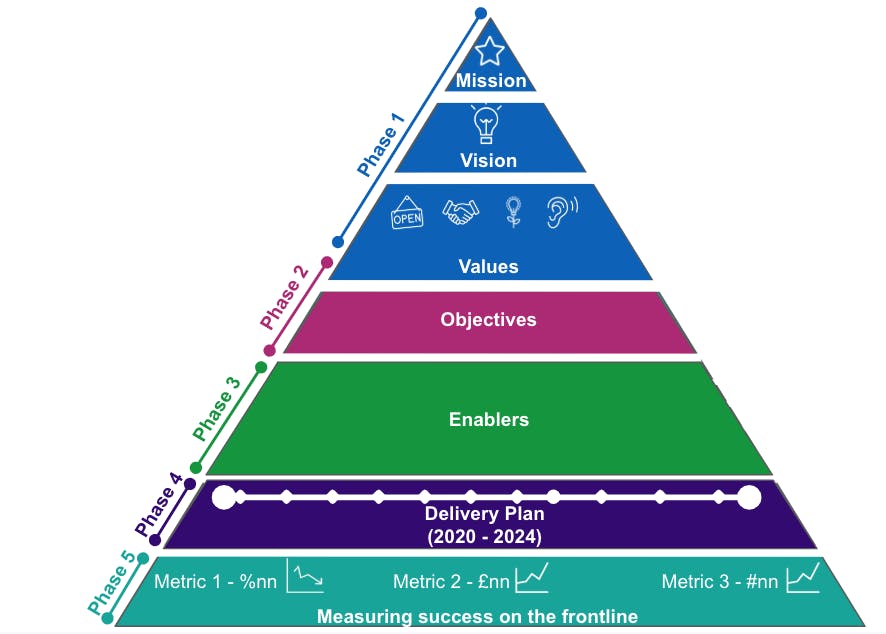
Phase 1
Have your say on the Tech Plan for health and care is currently at this stageSharing our vision and starting engagement
-
Phase 2
this is an upcoming stage for Have your say on the Tech Plan for health and careOur objectives for the next five years
-
Phase 3
this is an upcoming stage for Have your say on the Tech Plan for health and careEnablers to help us realise our objectives
-
Phase 4
this is an upcoming stage for Have your say on the Tech Plan for health and careOur delivery plan
-
Phase 5
this is an upcoming stage for Have your say on the Tech Plan for health and careMeasuring success